
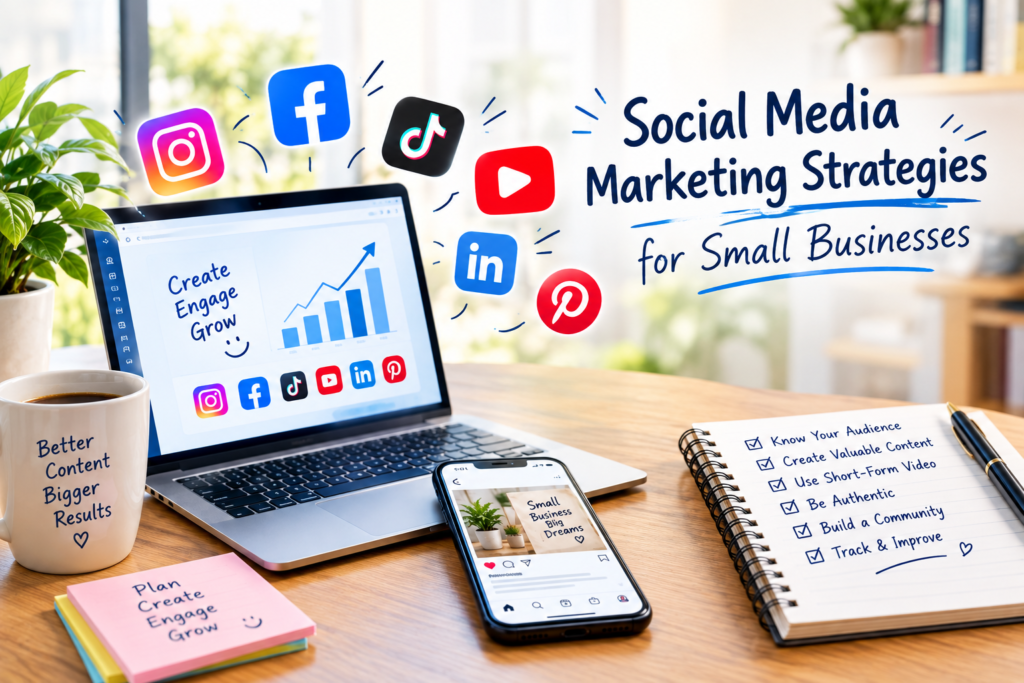
Social media has become an important part of digital marketing for small businesses. Platforms such as Instagram, Facebook, YouTube, and other social channels give businesses an opportunity to reach potential customers, showcase their products or services, and build relationships with their audience.
But successful social media marketing is not simply about posting every day. A strong strategy focuses on creating valuable content, understanding the audience, encouraging engagement, and building trust over time.
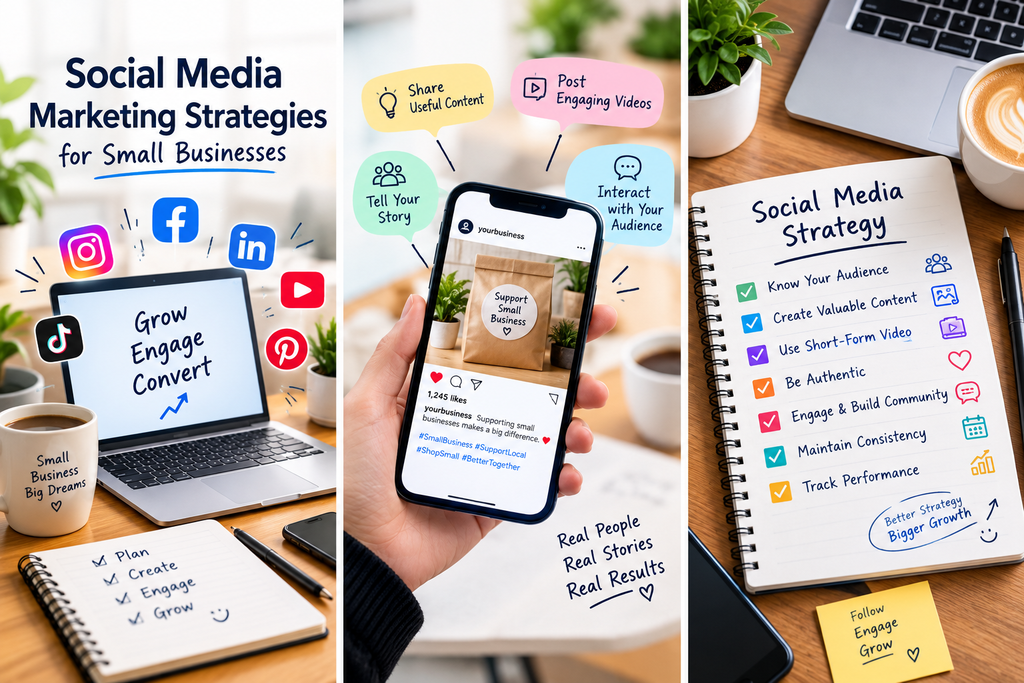
1. Know Your Target Audience
Before creating content, businesses need to understand who they are trying to reach.
Think about your ideal customers, their interests, problems, needs, location, and the type of content they enjoy.
When you understand your audience, it becomes easier to create posts that are relevant and useful instead of posting content without a clear purpose.
2. Create Valuable Content
People follow businesses on social media because they want something useful, interesting, entertaining, or inspiring.
Businesses can create different types of content such as:
- Educational tips
- Product demonstrations
- Customer stories
- Frequently asked questions
- Behind-the-scenes content
- Industry information
- Short videos
- Special offers
- Helpful guides
The goal is to provide value rather than constantly trying to sell something.
3. Use Short-Form Video
Short-form video has become an important way for businesses to capture attention online.
Small businesses can create simple videos showing how a product works, answering customer questions, sharing tips, introducing their team, or showing behind-the-scenes moments.
Professional equipment is not always necessary. A smartphone, good lighting, clear audio, and a useful idea can be enough to create engaging content.
4. Be Authentic
Customers want to connect with real businesses and real people.
Instead of making every post look overly polished, businesses can show the people behind the brand, daily activities, customer experiences, product preparation, or the story behind the business.
Authentic content can help create trust and make a brand feel more approachable.
5. Focus on Engagement
Social media should be a conversation, not just a broadcasting platform.
Reply to comments, answer messages, ask questions, create polls, and encourage customers to share their opinions.
When businesses actively communicate with their audience, customers are more likely to feel connected to the brand.
6. Build a Community
A large follower count does not always mean a successful business.
A smaller audience that genuinely trusts and interacts with a brand can be more valuable than thousands of inactive followers.
Businesses should focus on creating a community where customers feel heard and appreciated.
7. Maintain Consistency
Consistency helps people remember a brand.
Businesses do not necessarily need to post multiple times every day. Instead, create a realistic content schedule and follow it consistently.
For example, a business could plan educational posts, videos, customer content, and promotional posts throughout the week.
A simple content calendar can make social media management much easier.
8. Use Customer-Generated Content
Customers can become an important part of your marketing.
Reviews, testimonials, photographs, videos, and social media posts created by customers can provide valuable social proof.
With permission, businesses can share this content on their own social media channels. Real customer experiences can often be more convincing than traditional promotional messages.
9. Use Analytics to Improve
Social media platforms provide useful information about how content performs.
Businesses can monitor reach, engagement, views, clicks, follower growth, and other relevant metrics.
Instead of simply asking how many people saw a post, look at which types of content generate meaningful engagement and customer actions.
Use these insights to improve future content.
10. Avoid Selling in Every Post
One common mistake businesses make is turning every social media post into an advertisement.
Customers do not want to see the same sales message repeatedly.
A better strategy is to create a balance between educational, entertaining, community-focused, and promotional content.
When businesses provide value consistently, promotional content can feel more natural.
Final Thoughts
Social media marketing gives small businesses an affordable way to build awareness, communicate with customers, and grow their online presence.
The most successful strategy is not necessarily about having the most followers. It is about creating useful content, staying consistent, engaging with people, and building genuine relationships.
With the right strategy, social media can become more than a place to promote products. It can become a powerful community and customer-growth channel for your business.